A practical starting point for six-string guitar
Start small.
Play something.
You don’t need twenty chords before you can begin. Get a clear note, work on a steady change and give today’s practice one useful job.
Find your first steps →Already started? Make today’s plan
Your first useful session
Tune before you judge the sound.
Standard tuning runs low E, A, D, G, B, high E. A tuner and the correct octave matter.
Start in tune ↗Listen to one chord, one string at a time.
Use the Em diagram and check each string before adding a strum.
Open the chord desk ↗Give the change some room.
Move slowly between Em and Am. Find the next shape before worrying about speed.
Try a small exercise ↗The practice bench
Ten minutes?
Give them a purpose.
Choose a focus and build a 10, 20 or 30-minute session. Keep the target small enough that you can hear what changed.
Make a practice plan →TWO
THREE
FOUR.Open the metronome ↗
The chord desk
Read the shape.
Hear each note.
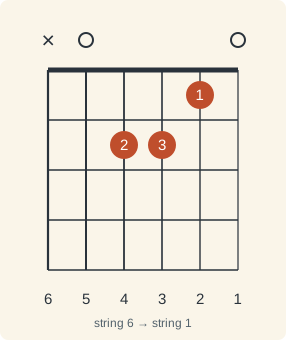
Eight open-chord diagrams with finger numbers, string-by-string text and notes on where to start your strum.
Learn how to read a diagram →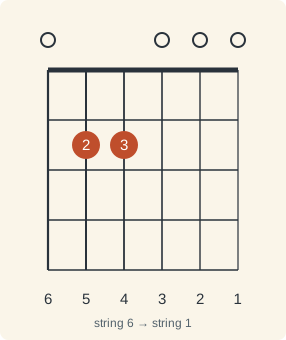
Gear that earns its place
Choose the guitar first.
Give every accessory a job.
A tuner, a suitable pick and a practical place to practise may be more useful than a drawer full of extras. Compare details before adding equipment.